Outdoor Play for Children: Benefits You Should Know
Discover the transformative power of outdoor play. This article explores the numerous physical and cognitive benefits that shape children's growth and developme
Have you ever experienced the chaotic yet fun journey of fort-building? What about the adrenaline rush of being chased in a game of tag? If so, try to remember the trial and error necessary for these childhood experiences. Outdoor activities like these challenge kids, help them develop crucial skills, and offer significant psychological benefits. Dive into this article to explore the many advantages of outdoor play and why it's so important for children's development.
"If we want our children to move mountains, we first have to let them out of their chairs"
- Nicolette Sowder
Physical Benefits
Outdoor play offers children numerous physical benefits. Running, jumping, and climbing are essential for developing gross and fine motor skills, as they require muscle movements that enhance strength, coordination, and balance.
Running around a playground works the cardiovascular system, promoting heart health and endurance. It builds a foundation for lifelong physical well-being and helps children avoid the pitfalls of a sedentary lifestyle.
Climbing a jungle gym or a tree provides a full-body workout, sharpening coordination as children learn to traverse different heights and footholds. Their grip and upper body strength improve, helping them tackle various physical tasks with greater ease.
Games like hopscotch on varied surfaces work on proprioception—understanding where the body is in space. This spatial awareness is crucial for both safety and physical competence.
Exposure to natural elements also plays a vital role. Sunlight offers a natural source of vitamin D, crucial for bone health, while fresh air aids in the development of a healthy immune system.1 The variety in terrain provides sensory stimulation, helping develop balance and spatial awareness.
Incorporating outdoor play into daily routines encourages children to move more and sit less. This active play is a significant step in combating childhood obesity and related health issues.2 It fosters a love for movement that can last a lifetime.
Cognitive Benefits
Outdoor play is instrumental in fostering cognitive development, allowing children to engage in problem-solving, improve spatial awareness, and unleash their creativity.
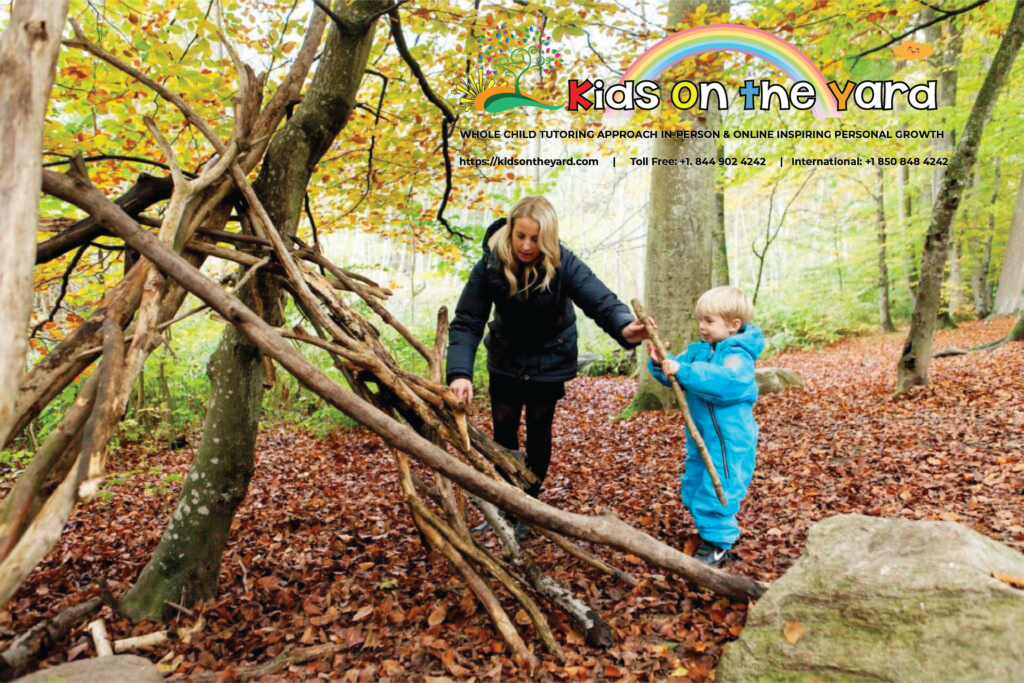
As children explore their surroundings, they encounter various challenges that require innovative solutions. Building a fort with sticks and leaves or figuring out how to cross a stream without getting wet compels children to think critically, analyze their environment, and devise strategies, sharpening their problem-solving skills.
Spatial awareness is another key cognitive benefit gained from outdoor play. Navigating a playground, estimating distances, or understanding how to fit through narrow spaces helps develop vital spatial skills essential for tasks ranging from moving through a classroom to understanding complex mathematical concepts later in life.
Creativity flourishes outdoors, untethered by the constraints of indoor environments. Nature serves as an unlimited canvas, where ordinary objects can transform into extraordinary tools of play. This level of imaginative play is vital for cognitive flexibility, allowing children to see multiple solutions to a problem and encouraging lateral thinking.
Playing outdoors also facilitates experiential learning. A child might learn about the life cycle of plants by observing flowers blooming in the garden, or they could grasp the concept of physics by watching how different objects float or sink in a puddle. Direct engagement with the natural world offers invaluable education that can't always be replicated within four walls.
Social interactions during outdoor play further enhance cognitive growth. Negotiating roles in a game of pretend or collaborating to build a sandcastle fosters communication, teamwork, and empathy—skills that are essential for cognitive and social development.
The real-world scenarios presented during outdoor play demand that children adapt and think on their feet. This kind of dynamic thinking prepares them for academic success and navigating everyday challenges.
Social and Emotional Benefits
Outdoor play provides children with opportunities to engage with their peers, fostering the essential life skills of cooperation, negotiation, and conflict resolution.
When children play outside, they often participate in group activities that require teamwork and collaboration. Organizing a game of tag, coordinating the building of a sandcastle, or deciding the rules for a new game teaches children to:
Work together toward a common goal
Share responsibilities
Take turns
Listen to others' ideas
These skills are crucial for building and maintaining relationships.
Negotiation flourishes in the outdoor play environment. Deciding who will be 'it' in a game of hide and seek provides opportunities for children to practice negotiation and compromise. They learn to articulate their points of view, understand differing perspectives, and find mutually agreeable solutions. These negotiation skills lay the groundwork for effective communication and conflict management in adulthood.
Conflict resolution is an inevitable aspect of group play. Disagreements over game rules or the sharing of toys offer a natural setting for children to navigate these conflicts independently. They learn valuable lessons in empathy as they consider their friends' feelings and work towards resolving disputes amicably. This enhances their social-emotional development and builds resilience.
Beyond interpersonal skills, outdoor activities significantly boost self-confidence and emotional well-being. Successfully climbing a tree, navigating a tricky path, or leading a group activity instills a sense of accomplishment and confidence. These experiences foster a positive self-image and encourage children to trust their abilities.
Outdoor play also serves as a powerful stress reliever. The natural environment has a calming effect that helps reduce anxiety and tension.3 The sensory experiences of feeling the breeze, hearing the rustle of leaves, and seeing the vibrant colors of nature can uplift a child's mood and promote emotional balance. Physical activity itself triggers the release of endorphins, enhancing overall emotional well-being.
The freedom and openness of outdoor play allow children to express themselves more freely compared to structured indoor settings. This freedom supports emotional expression and assists children in understanding and managing their feelings.
Misra M, Pacaud D, Petryk A, Collett-Solberg PF, Kappy M. Vitamin D deficiency in children and its management: review of current knowledge and recommendations. Pediatrics. 2008;122(2):398-417.
Sahoo K, Sahoo B, Choudhury AK, Sofi NY, Kumar R, Bhadoria AS. Childhood obesity: causes and consequences. J Family Med Prim Care. 2015;4(2):187-192.
Bratman GN, Hamilton JP, Hahn KS, Daily GC, Gross JJ. Nature experience reduces rumination and subgenual prefrontal cortex activation. Proc Natl Acad Sci U S A. 2015;112(28):8567-8572.
The content published on this page is for general educational and informational purposes only. Articles, opinions, and recommendations shared by authors, contributors, parents, educators, students, and professionals reflect their own views and experiences and do not necessarily represent the positions, strategies, or opinions of Kids on the Yard.
Kids on the Yard does not endorse or recommend any specific medical treatments, therapies, vaccines, medications, curricula, educational products, or instructional methods mentioned in this or any article. Any health-related information is provided for awareness only and should not be used as a basis for diagnosis, treatment, or medical decisions. Always consult a qualified healthcare provider for medical concerns.
Educational opinions, curriculum reviews, and teaching strategies discussed in articles are general in nature. Parents and guardians are solely responsible for evaluating and selecting educational approaches appropriate for their children.
Nothing in this article constitutes legal, financial, medical, or other professional advice. For specific guidance in any of these areas, please consult an appropriately licensed professional.
Kids on the Yard assumes no liability for actions taken based on the content of any article.